Personal Injury Attorneyin Awendaw, SC.
We at the Theos Law Firm know that finding the right attorney to represent you is a choice not to be taken lightly.
 843-577-7046
Theos Law Firm:
Rigorous Representation When You Need It Most
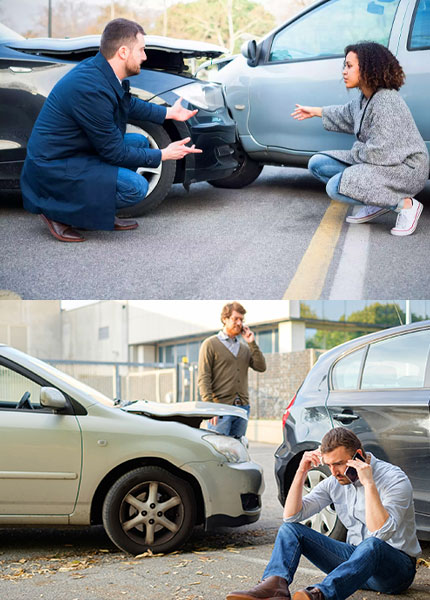
When an auto accident happens unexpectedly, anyone can become a victim. One moment you're commuting back home after a long day at the office. The next, your car is totaled, and you're injured in the hospital due to another person's negligence. It's not fair, but it happens every day. Unlike the irresponsible party who caused the accident, personal injury victims often suffer the most in auto accidents. They have to worry about lost days at work, the long road to recovery, and the inability to provide for their family. Sadly, many people injured in car accidents don't have the luxury of worrying about bills because they're fighting for life in the emergency room.
And while modern cars come equipped with safety features like blind spot monitoring and cross-traffic alerts, motor vehicle accidents are still a huge problem in South Carolina. According to the South Carolina Department of Public Safety, in 2020, one person was injured every 11 minutes in a car collision. Even worse, one fatal collision was recorded every 9.1 hours.
Unfortunately, victims of auto accident negligence often don't know what to do when another driver hits them. They have questions like:
- Q."Who do I need to contact once the police leave?"
- Q."How will I go to work on Monday?"
- Q."Will I get fired because I can't show up?"
- Q."How will I take care of my family?"
These same innocent people provide official statements to insurance agencies without knowing the consequences.
However, if you or your loved ones are victims in a car crash, there's good news. Laws in South Carolina mandate that guilty parties must compensate for pain and suffering. But in order to get the compensation you deserve, it's crucial to work with a personal injury attorney in Awendaw, SC. Experienced personal injury lawyers know how to bolster your case by securing witnesses for questioning, obtaining accident scene information, and documenting vehicle damage. If these tasks aren't completed quickly, you are far less likely to receive the compensation you and your family deserve.
The Theos Law Firm Difference
Theos Law Firm exists to fight for your rights and to ensure negligent drivers are held responsible for the damage they do to your family. It's really that simple. We aren't afraid to trade blows with selfish insurance agencies. Because, unlike Theos Law Firm, they couldn't care less about your best interests.
Here are just a few reasons why so many hardworking people choose Theos Law Firm:

We Know How You Feel
When you're involved in a car or truck accident, it can be a life-changing event. Having represented hundreds of personal injury victims, we understand that you may be confused and frightened. You know you need to speak with a lawyer, but you need a calm, cool presence to ease your anxiety. You need someone who understands what you're enduring, and we know how you feel. Unlike other auto accident attorneys, we believe that personal injury claims are more about the people involved and less about money and settlements. When you reach out to Theos Law Firm, you can rest easy knowing our team will treat you with dignity, compassion, and empathy.

We've Seen It All
With many years of combined personal injury experience, there's nothing that our team hasn't seen in terms of auto accidents. With that said, we understand that there is no "common" type of accident or scenario - no two accidents are the same. We have represented clients involved in DUI accidents, truck rollovers, reckless drivers, interstate pileups, rear-end collisions, and even Uber driver crashes. With such extensive experience, our team has the tools and talent to take care of you, regardless of how complicated your case might be.

We Carry Your Burden
The recovery process involved with automobile accidents changes with every person we represent. There are dozens of details to account for, from car repairs to insurance questions and everything in between. These small but necessary details aren't easy to accomplish for injured parties. That's why our team goes the extra mile to help cut through the red tape to ensure your medical bills are paid, and your car gets fixed. The less weight you have on your shoulders to worry about, the faster you can focus on recovering.
Unlike other personal injury law firms, our team is 100% committed to protecting your rights, and we're uniquely positioned to do so with decades of combined experience. We offer robust representation for many types of auto accidents, including:
- Car Accidents
- Truck Accidents
- DUI
- Rollovers
- Reckless Driving
- Car and Truck Defects
- Speeding
- Rear-End Collisions
- Texting While Driving
- Uninsured Motorists
If you have been the victim of an accident listed above, please understand that time is of the essence. There is limited time to seek compensation for your injuries, hospital bills, lost wages, and more. As such, there is only a short time to obtain experienced representation for your personal injury case.
Our team knows that finding the right attorney to represent you is an important choice. Therefore, we believe that an initial consultation is imperative to understand your needs and identify your goals fully. When we sit down with you to learn the nuances of your accident, we'll cover all aspects of South Carolina law pertaining to your case. That way, you're armed with information and have an idea of the next steps our firm will take to represent you.
Remember - the sooner we can dig into the details of your case, the sooner we can pursue your rightful compensation. As seasoned personal injury attorneys, our team specializes in several types of automobile accidents:
Car Accidents in South Carolina
Car accidents are a serious problem in South Carolina. If you're an adult, you probably know someone involved in a bad car crash in our state. When you look at the stats, it seems like car accidents are always on the rise. One person was killed every 8.2 hours in a car collision. Even more sobering is that one teen driver is involved in a fatal or injury-causing collision every 1.6 hours. The unfortunate truth is that many people involved in car crashes were hurt due to the other driver's negligence.
Common car crash injuries in South Carolina include:
- Head Trauma
- Neck Injuries
- Lacerations
- Broken Bones
- Soft Tissue Injuries
- Spinal Cord and Back Injuries
- Punctured Organs
- Burns
- Disfigurement
Car accident victims in South Carolina are often left to pay their medical bills but can't do so because they're too hurt to go to work or take their car in for repair. These life-changing scenarios can snowball into a series of scary events, leaving victims hopeless and unsure where to turn.

Fortunately, a car accident attorney in Awendaw, SC can help you avoid these pitfalls and obtain the money you need to survive. At Theos Law Firm, our team has a deep understanding of the rules that dictate fault in South Carolina. We know that thorough representation is needed to receive maximum compensation, and we're well-prepared to achieve that goal for you.
Our car accident lawyers in South Carolina can recover compensation for injuries and damages:
- Lost Wages from Missed Work
- Medical Expenses
- Vehicle Repairs
- Pain and Suffering
- Mental Anguish
- Ongoing Medical Care
- Rehabilitative Services
- Loss of Companionship if Crash is Fatal
What Should You Do After a Car Accident in South Carolina?
The moments following the crash are often a blur when you're involved in a car accident. However, per South Carolina law, those on the scene must adhere to legal responsibilities and obligations.
First, try to stop your car and ensure it is positioned safely near the scene of the crash. Then, call 911 to report the accident. While most folks go into full-blown panic mode, you need to stay calm so you can process the situation. If you notice that there are injured people, give them "reasonable assistance." Per South Carolina Code of Laws, that could include transporting hurt people to a hospital or calling an ambulance for them.
If you're in a car crash, you need to be prepared to exchange contact information with other drivers at the accident scene. If the person who caused the collision is present, make sure to get their name, phone number, address, and insurance info. If witnesses are present, get their contact info, too, in case our team needs to obtain their account later.
Next, try to piece together how the car crash happened. This is an appropriate time to take photos of the cars, wreckage, and debris. Ask yourself if you think a vehicle failed to follow the rules of the road, like speeding or failing to stop at a stop sign.
Regardless of how minor your injuries may appear and who may be to blame for the accident, get legal advice from Theos Law Firm first before giving any recorded statements or refusing medical care.
Truck Accidents in South Carolina
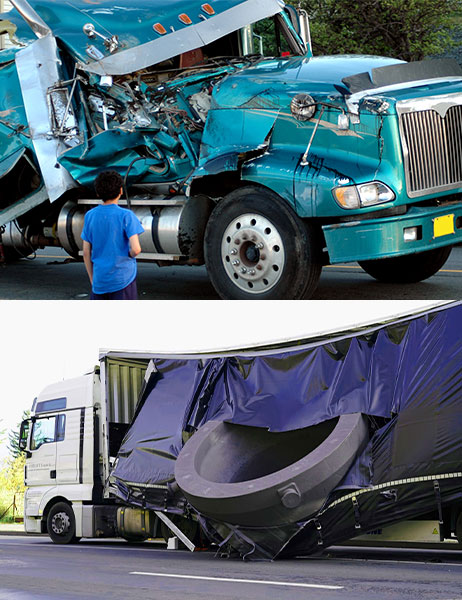
Tractor-trailer and semi-truck crashes are often more complicated than two car crashing. Because these cases are more complex and nuanced, it's imperative that you contact a truck accident attorney in Awendaw, SC to help you through the recovery process and win the compensation you deserve.
After a semi-truck crash, you must take steps quickly to preserve evidence so that the crash may be recreated. In serious semi-truck accidents where people are injured or killed, trucking companies usually send a team of investigators to the accident site immediately. These investigators will do their best to obtain evidence that can hurt you in court or even attempt to hide or destroy evidence. The last thing a trucking company wants is for you to win a settlement against them.
That's especially true since various entities may be liable for your truck accident injury, not just the driver. The trucking company, the trucking manufacturer, and the team responsible for truck maintenance could also be responsible. Additionally, if dangerous or inadequate road conditions factor into your accident, you could actually sue some government departments. For those reasons, it's critical to retain quality representation ASAP after a truck accident in South Carolina.
At Theos Law Firm, our team has experience winning compensation in many types of truck accidents, such as:
- No-Zone Accidents
- DUI Accidents
- Trucker Error Accidents
- Negligence Associated with Trucking Company
- Semi-Truck Defects and Malfunctions
- Speeding
- Rear-End Collisions
Car Accident Attorney for chad cook

Car Accident Lawyer for Jack Joseph
Family Law for Deon
Family Law attorney for Kimberly Milligan
Family Lawyer for adriel Willis
Personal Injury Lawyer for Randy Greenhill
Truck Accident Attorney for John Anthony
Truck Accident Lawyer for Gilly Artigues
Law Firm for Rebecca Hinkle
Attorney at Law for Bryan Morales
Car Accident Attorney for Daina McGrew
Car Accident Lawyer for Daina Morales
Family Law for Jesse Hulbert
Family Law attorney for NLMB mari
Family Lawyer for Elias
Personal Injury Lawyer for Elias Latto
Truck Accident Attorney for Joe Sottile
Truck Accident Lawyer for Bruce Cohen
Law Firm for Kimi Swinson
Attorney at Law for David W
Car Accident Attorney for Colson Gunn
Car Accident Lawyer for Hunter McCaskill
Family Law for Meryl Cromarty
Family Law attorney for Nick LaVecchia
Family Lawyer for Kenji Kennerly
How Theos Law Firm Helps Win Your Semi-Truck Accident Case
As your truck accident lawyer in South Carolina, we work hard to fight for your rights and win your case. In order to do so, our team will:

Examine the Semi-Truck Crash Scene
We'll arrive on-scene to notate skid mark length and the locations of vehicles involved. We will also capture detailed pictures and measurements pertinent to your crash.

Collect Records of the Trucking Company
Obtaining the trucking company's records and discovering the info they have on the semi-truck driver involved is an important part of our process. We will also secure access to the trucker's driving log notes, which they must maintain according to law.

Gain Access to the Truck's Black Box
Like airplanes and helicopters, big rigs have a "black box" that records real-time truck data, like speeds, changes in direction, and brake application.

Obtain Evidence
We'll arrive on-scene to notate skid mark length and the locations of vehicles involved. We will also capture detailed pictures and measurements pertinent to your crash.

Bring in Experts
Sometimes an expert is needed to digest all the evidence and provide an expert opinion on the cause of the semi-truck collision. When needed, our team will hire such an expert to ensure your case is robust and air-tight.

Acquire Police Records
We will obtain the police's investigation report and any accident photos, measurements, or other documentation taken by officers while investigating your semi-truck crash.

Interview Witnesses
It's imperative to find all the witnesses of your accident and interview them to get recorded statements in a timely manner. Doing otherwise may result in faded memories and inaccurate facts.
A Personal Injury Attorney in Awendaw, SC You Can Trust
Time and again, auto accident victims agree to early settlements provided by insurance companies because the offer seems like a lot. But what if you return to work after recovering from an accident, only for your pain to return?
With adjusters, lawyers, and investigators at their disposal, insurance agencies will do everything in their power to minimize the compensation you deserve. Don't let them pick on you or silence your voice. If you or a loved are victims of a negligent car or truck accident in South Carolina, contact Theos Law Firm today. We have the team, tools, and experience to fight back on your behalf, no matter how complicated your case may seem.
To schedule an appointment for your free consultation, contact Theos Law Firm in Awendaw today.
Free Consultation
Latest News in Awendaw, SC
Awendaw, afraid of becoming Mount Pleasant, halts most new subdivisions
David Slade dslade@postandcourier.comhttps://www.postandcourier.com/news/moratorium-on-development-takes-hold-in-coastal-awendaw-sc/article_a7e1c844-d25b-11ee-9bbe-ebacc6395028.html
That’s the message this small coastal town is delivering to developers with a temporary ban on most new subdivisions.In the fastest-growing state in the nation, Awendaw is among an increasing number of local governments adopting moratoriums that halt some types of development for a short time or for many years.The justification for such moratoriums is typically to create time to update local development rules, usually to make them more strict once the moratorium is lifted. That’s the case in Awendaw.The rural...
That’s the message this small coastal town is delivering to developers with a temporary ban on most new subdivisions.
In the fastest-growing state in the nation, Awendaw is among an increasing number of local governments adopting moratoriums that halt some types of development for a short time or for many years.
The justification for such moratoriums is typically to create time to update local development rules, usually to make them more strict once the moratorium is lifted. That’s the case in Awendaw.
The rural village of about 1,400 residents in Charleston County sits just above Mount Pleasant, and the towns share a municipal border. Mount Pleasant became South Carolina’s fourth-largest municipality after decades of suburban development and has about 94,000 residents.
Mount Pleasant residents eventually got fed up with rapid growth, more traffic and crowded schools. The town now has limits on annual building permits, high development impact fees and a moratorium on multi-family construction that has been in place for seven years.
Awendaw Councilman Kent Prause had a front-row seat for much of Mount Pleasant’s love/hate relationship with growth because he was the town’s zoning administrator. Prause has been leading the push for Awendaw’s moratorium on zoning changes and subdivisions.
“Volume builders and tract home builders are coming in,” he said. “They pretty much built out Mount Pleasant and now they are coming here .”
“The people didn’t like it and that’s why the moratorium is in place,” said Prause. “They don’t want it to be Mount Pleasant.”
The Awendaw moratorium hasn’t been finalized, but it took effect in January under what’s known as the pending-ordinance doctrine. That means the rules took hold as soon as Awendaw’s council gave initial approval to the measure, although a final vote at a meeting scheduled for March 7 is still needed.
The ordinance states that “Town Council finds that the increase in the number and size of large-scale residential developments in the Town pose a risk to public health, safety, welfare, and quality of life in Awendaw...” for many reasons.
The moratorium wouldn’t halt developments that have already been approved. What it would do is:
Today's Top Headlines
Of course, moratoriums can also be extended, as Mount Pleasant has done multiple times with its ban on new multi-family housing.
And Awendaw’s moratorium rules could change before they get final approval. The town’s Planning Commission recommended a 10-parcel cutoff for new subdivisions, instead of five, and allowing zoning changes on parcels of less than 10 acres.
At a Town Council hearing Feb. 22, no one spoke in favor of the Planning Commission’s recommendations. Several residents urged the council to approve the moratorium without changes.
“We’ve already approved so many homes in this town,” said Susan Cox. “We need to stop it, and figure out what is going on.”
Developers paid limited attention to Awendaw for a long time because the town lacks a sewer system. New developments need to use septic systems, which require state permits and are more likely to fail in places where the water table is high.
But the Charleston area’s population growth and Mount Pleasant’s limits on development and lack of available land have increasingly pushed development up the coast.
In 2022, Awendaw approved a 204-home subdivision on 148 acres near Seewee and Bulls Island roads over objections that its more than 200 septic systems could fail and send raw sewage into the waters near Cape Romain Wildlife Refuge.
Awendaw can’t ban septic systems because there’s no other option for treating household sewage, but in 2023 the town made it more difficult to build dense subdivisions where each house has a septic system. Awendaw adopted rules for minimum lot sizes, distance from wetlands and other regulations.
“It seems the less stringent rules are letting developers come in and have their way with the town,” Planning Commission member James Gardner told council members at the time.
The pending development moratorium is the latest result of a change in attitudes and leadership in Awendaw. In the earlier 2000s the town aggressively sought to grow its boundaries through annexations — prompting court challenges — and approved some large subdivisions.
“Managed growth is the key to Awendaw’s future,” reads the first sentence of a large, framed copy of the town’s vision statement, on the wall where Town Council meets.
Awendaw passes subdivision moratorium, plans more restrictions on residential development
David Slade dslade@postandcourier.comhttps://www.postandcourier.com/news/awendaw-sc-blocks-new-subdivisions-and-considers-new-rules-to-slow-growth/article_6cea5764-db3f-11ee-a683-078d6b0a0c00.html
The town is also considering rules to increase protection of large trees — including pine trees, which some governments exempt — and those rules would be enforced with larger fines.Rural Awendaw is largely surrounded by the Francis Marion National Forest and the Atlantic coast, but it also shares a border with South Carolina’s fourth-largest municipality, Mount Pleasant.With about 1,400 residents, Awendaw’s population could more than triple due to developments that already have been approved. One subdivi...
The town is also considering rules to increase protection of large trees — including pine trees, which some governments exempt — and those rules would be enforced with larger fines.
Rural Awendaw is largely surrounded by the Francis Marion National Forest and the Atlantic coast, but it also shares a border with South Carolina’s fourth-largest municipality, Mount Pleasant.
With about 1,400 residents, Awendaw’s population could more than triple due to developments that already have been approved. One subdivision alone, known as the King Tract, could have 965 homes on 1,354 acres under a 2009 development agreement with the town .
The town has no sewer system, and construction of so many new houses with septic systems has raised concerns about pollution. Awendaw’s government has gone from welcoming and encouraging development to applying the brakes, after changes in leadership.
On March 7, Town Council gave final approval to a moratorium — a temporary freeze — that would:
Developments that already have been approved would see no impact from the moratorium.
The freeze on most subdivisions and rezonings has been in effect since early January, because it was initially approved then, and was applied under the pending ordinance rule. That allows municipal rules to take effect while awaiting a final vote.
Next, the town will consider nearly doubling the amount of land required to build a single-family home, from 12,500 square feet to 21,500, roughly a half-acre. That’s a strategy other South Carolina towns and cities have used to reduce the density of development.
If that rule is adopted, it would take nearly twice the amount of land to build the same number of new homes in Awendaw.
Today's Top Headlines
Town planner Mark Brodeur told council members the rule change is intended to reduce “development intensity” and septic systems on smaller lots. At a public hearing March 7, no one spoke in opposition to the concept.
At the same meeting Brodeur laid out proposed tree-protection changes, saying the town’s current rules are unclear and need to be more robust.
What’s proposed it reducing the size of hardwood trees such as Live Oaks that would be protected, from an 18-inch diameter at chest height to 12 inches. Softwood trees would also be protected if they are at least 30 inches in diameter at chest height.
Removing a protected tree without a permit would, under the proposal, result in a $250-per-day fine until mitigation steps are taken. That would mean planting new, native trees to compensate, or paying into a town tree fund at $100 per inch.
“The current ordinance doesn’t have a stick attached to it,” Brodeur said. “An ordinance is only as good as its enforcement.”
Some Awendaw residents said the proposed fine should be much higher. John Brubaker suggested $500 per diameter inch, and said Georgetown County has such a rule.
“I would encourage you to consider that,” said resident Grace Gasper, echoing Brubaker.
Carol Riggs was displeased to hear the planned tree rules explained.
“So, I have to ask permission to cut a pine tree on my own land?” she said. “Who are you to tell me if I can cut a tree?”
Brodeur said residents should rest assured that damaged or diseased trees, or those within 10 feet of a home’s foundation, would be permitted for removal. Brodeur said he’s never refused such a permit.
Both the tree protection rules and the minimum lot sizes for new homes are proposals that would require action by Town Council.
Bucs go for Hootie at Bulls Bay three-peat
East Tennessee State Universityhttps://etsubucs.com/news/2024/3/23/mens-golf-bucs-go-for-hootie-at-bulls-bay-three-peat.aspx
AWENDAW, S.C. (March 23, 2024) – The ETSU men's golf team will look to make it three straight wins at Hootie at Bulls Bay. The Bucs, who have won on their last two trips to Bulls Bay Golf Club, begin tournament play on Sunday morning in Awendaw, S.C.The Bucs will be eyeing to join South Carolina and NC State as the only teams in tournament history to win at least three times.TOURNAMENT INFORMATION Name: Hootie at Bulls Bay Dates: Sunday, March 24 &ndash...
AWENDAW, S.C. (March 23, 2024) – The ETSU men's golf team will look to make it three straight wins at Hootie at Bulls Bay. The Bucs, who have won on their last two trips to Bulls Bay Golf Club, begin tournament play on Sunday morning in Awendaw, S.C.
The Bucs will be eyeing to join South Carolina and NC State as the only teams in tournament history to win at least three times.
TOURNAMENT INFORMATION Name: Hootie at Bulls Bay Dates: Sunday, March 24 – Tuesday, March 26 Location: Awendaw, S.C. | Bulls Bay Golf Club Course Info: Par 72 – 7,349 yards Format: 18-18-18 (Sunday-Tuesday) Live Scoring: Golfstat Weather: Sunday – 62°, Sunny, Winds NNE @ 12 mph; Monday – 64°, Partly Cloudy, Winds ENE @ 7 mph; Tuesday – 67°, Mostly Cloudy, Winds E @ 9 mph
THE FIELD · The tournament field features South Carolina, New Mexico, Kentucky, NC State, Kent State, Furman, Purdue, College of Charleston, West Virginia, Missouri, Marquette, LSU, ETSU and Toledo · Eight of the teams in the field of 14 are ranked in the top 75 of Scoreboard Men's Golf Rankings powered by Clippd – No. 15 ETSU, No. 19 New Mexico, No. 33 Purdue, No. 35 Missouri, No. 37 LSU, No. 59 South Carolina, No. 71 College of Charleston and No. 72 Kentucky
ETSU's LINEUP · ETSU's lineup features #1 Mats Ege, #2 Algot Kleen, #3 Matty Dodd-Berry Chartier, #4 Jenson Forrester and #5 Remi Chartier · Ben Carberry will be playing as an individual · Pairings have yet to be released … Tee times for the first two rounds begin at 9 a.m., while Tuesday's final round will begin at 8 a.m.
COVERAGE · Fans can follow live scoring all weekend at Golfstat.com. · In addition, live tweets will be available by following the Bucs on Twitter @ETSU_MGolf.
For more information on Buccaneer men's golf, visit ETSUBucs.com and click on the men's golf page.
Awendaw homeowners concerned about ditch maintenance: ‘It’s a nuisance’
Caitlin Ashbaughhttps://www.live5news.com/2024/01/16/awendar-homeowners-concerned-about-ditch-maintenance/
AWENDAW, S.C. (WCSC) - Some homeowners in Awendaw say they are concerned severe weather may be bringing severe problems to their properties.Community members living on Seewee Road claim more recent storms in the Lowcountry have caused drainage issues for roadside ditches along the six-mile stretch of rural road.“My backyard is just totally covered with water,” neighbor Stephen Flagg says. “My front yard has been totally covered with water. I mean, something just needs to be done.”Flagg lives on th...
AWENDAW, S.C. (WCSC) - Some homeowners in Awendaw say they are concerned severe weather may be bringing severe problems to their properties.
Community members living on Seewee Road claim more recent storms in the Lowcountry have caused drainage issues for roadside ditches along the six-mile stretch of rural road.
“My backyard is just totally covered with water,” neighbor Stephen Flagg says. “My front yard has been totally covered with water. I mean, something just needs to be done.”
Flagg lives on the same portion of land as his grandmother, Lillie Swinton. The family has called Seewee Road home since the 1960s. They say they have noticed the problem for decades.
Both Swinton and Flagg say taking care of the ditches along the property is one thing, but they believe fixing the ditches along the wooded areas and uninhabited spaces would make a big difference.
“Anytime we have heavy rain, the water settles. The ditch drain, there’s nowhere for it to go,” Swinton says. “When summer comes, we’re going to have a lot of trouble with mosquitos, and moccasin snakes.”
At one end of Seewee Road sits the Town of Awendaw Town Hall. Town Administrator Gregory Saxton says he has heard the concerns of neighbors and relayed them to the South Carolina Department of Transportation for assistance.
Seewee Road is a state road and therefore maintained by SCDOT through work orders.
“We just want something to be done. Because after all, we’re taxpayers, just like others. We should be able to have access to things, just like the other communities,” homeowner Alberta Goodwine says. “When it’s raining, the water just settles into the ditches and overflows in the yard. It’s a nuisance.”
Goodwine worries parts of the neighborhood community have been neglected. She adds it is a problem that affects her social life and her daily routines.
“When I step out, I’ve gotta have a boot on coming off the step. To protect myself,” Goodwine says. “Put pipes or something, so drainage will go somewhere, not on my property.”
SCDOT spokesperson Ginny Jones released the following statement:
We had a crew work on ditches along Seewee Road Jan. 2-5. Last week, the crew had to work on storm recovery efforts, but we have employees back out there today. The crew will not be onsite tomorrow due to a regularly scheduled safety meeting, but they will return on Thursday and Friday, as well as next week if necessary. Our crews are digging along approximately 9,100 linear feet of roadway, so it is taking some time, but we will continue to work on it as needed.
Regarding a work order, the answer is both: A citizen may enter an online work request, or a municipality may enter a work request on behalf of a citizen. Online work requests can be submitted here: https://apps.scdot.org/mwro/
We have been in touch with the Town of Awendaw about this work. Please let us know if you need any further information.”
When asked for clarification on how uninhabited portions of the road are maintained, Jones released this response:
SCDOT maintains what is in our right of way. If the land belongs to a municipality, county, or other party, we often work with those folks to plan for maintenance, but there are a lot of different ways that can look.
Copyright 2024 WCSC. All rights reserved.
Awendaw mayor responds to concerns of overdevelopment
Conley Graysonhttps://abcnews4.com/news/local/awendaw-mayor-responds-to-concerns-of-over-development
AWENDAW, SC (WCIV) — For weeks, Awendaw residents have been expressing concerns about the potential of hundreds of new homes coming to their community."Town council has approved 822 new residences with more on the docket tonight," Awendaw resident John Cooke said. "Those residences come with a population that will at least double our current population."Read more: ...
AWENDAW, SC (WCIV) — For weeks, Awendaw residents have been expressing concerns about the potential of hundreds of new homes coming to their community.
"Town council has approved 822 new residences with more on the docket tonight," Awendaw resident John Cooke said. "Those residences come with a population that will at least double our current population."
Read more: Awendaw residents fear housing boom could threaten town's rural charm
However, Mayor Miriam Green says the population will not be doubled.
"It's not the truth," Green said. "It's not a total of 800 homes. And if it is, they still have to go through planning."
"I can't say it's 800, 9,00, or 1,000 homes because I don't know," she continued. "But in the preliminary plan, yes, it did say certain amount of homes will be built up there."
Green describes the development plans as "smart growth".
"We are following ordinance and processes of procedures and state guidelines," she said.
In response to the concerns about the development plans being too much in too little time, Green says the town has to follow guidelines and the rules.
"Just because someone comes to you and says 'This is what we want,' doesn't meant that's what the majority of the citizens of Awendaw want," the mayor said.
Residents have also expressed concerns about how new developments may affect Awendaw's roads and infrastructure.
Read more: Ten Mile Neighborhood Association challenges proposed approval of development along Seafood Road
"Last meeting, I heard emergency services people talk about the fact that they were concerned about their ability to support the town," Cooke said. "The roads, the infrastructure might not be able to support (new development). The roads that were made in the early 1950s-60s are still the ones being used today and could fail."
Green says the infrastructure, road, and traffic issues are being analyzed as part of the development plans.
"We're looking at all that stuff," the mayor said. "We have a traffic study in place, but it doesn't happen overnight."
Another concern is the septic tanks that will be used for the new development, which Green says the town is working on with the South Carolina Department of Health and Environmental Control (DHEC).
Read more: Zoning denial a 'win' for some Awendaw residents
"20 years when all these systems start to fail, you could have an ecological disaster that could affect a lot of bulls bay and the intercoastal waterways," Cooke said.
The evening of Aug. 21, the Awendaw Planning Commission reviewed the Harper Valley proposal. It was denied in a 5-1 vote.
Cooke says people who live in Awendaw are banding together in opposition and they are asking for a moratorium to slow down the development.
"It's a growing pain in Awendaw," Green said. "It's not the people that live here. It's the people that came here."
Disclaimer: