Personal Injury Attorneyin Bluffton, SC.
We at the Theos Law Firm know that finding the right attorney to represent you is a choice not to be taken lightly.
 843-577-7046
Theos Law Firm:
Rigorous Representation When You Need It Most
When an auto accident happens unexpectedly, anyone can become a victim. One moment you're commuting back home after a long day at the office. The next, your car is totaled, and you're injured in the hospital due to another person's negligence. It's not fair, but it happens every day. Unlike the irresponsible party who caused the accident, personal injury victims often suffer the most in auto accidents. They have to worry about lost days at work, the long road to recovery, and the inability to provide for their family. Sadly, many people injured in car accidents don't have the luxury of worrying about bills because they're fighting for life in the emergency room.
And while modern cars come equipped with safety features like blind spot monitoring and cross-traffic alerts, motor vehicle accidents are still a huge problem in South Carolina. According to the South Carolina Department of Public Safety, in 2020, one person was injured every 11 minutes in a car collision. Even worse, one fatal collision was recorded every 9.1 hours.
Unfortunately, victims of auto accident negligence often don't know what to do when another driver hits them. They have questions like:
- Q."Who do I need to contact once the police leave?"
- Q."How will I go to work on Monday?"
- Q."Will I get fired because I can't show up?"
- Q."How will I take care of my family?"
These same innocent people provide official statements to insurance agencies without knowing the consequences.
However, if you or your loved ones are victims in a car crash, there's good news. Laws in South Carolina mandate that guilty parties must compensate for pain and suffering. But in order to get the compensation you deserve, it's crucial to work with a personal injury attorney in Bluffton, SC. Experienced personal injury lawyers know how to bolster your case by securing witnesses for questioning, obtaining accident scene information, and documenting vehicle damage. If these tasks aren't completed quickly, you are far less likely to receive the compensation you and your family deserve.
The Theos Law Firm Difference
Theos Law Firm exists to fight for your rights and to ensure negligent drivers are held responsible for the damage they do to your family. It's really that simple. We aren't afraid to trade blows with selfish insurance agencies. Because, unlike Theos Law Firm, they couldn't care less about your best interests.
Here are just a few reasons why so many hardworking people choose Theos Law Firm:

We Know How You Feel
When you're involved in a car or truck accident, it can be a life-changing event. Having represented hundreds of personal injury victims, we understand that you may be confused and frightened. You know you need to speak with a lawyer, but you need a calm, cool presence to ease your anxiety. You need someone who understands what you're enduring, and we know how you feel. Unlike other auto accident attorneys, we believe that personal injury claims are more about the people involved and less about money and settlements. When you reach out to Theos Law Firm, you can rest easy knowing our team will treat you with dignity, compassion, and empathy.

We've Seen It All
With many years of combined personal injury experience, there's nothing that our team hasn't seen in terms of auto accidents. With that said, we understand that there is no "common" type of accident or scenario - no two accidents are the same. We have represented clients involved in DUI accidents, truck rollovers, reckless drivers, interstate pileups, rear-end collisions, and even Uber driver crashes. With such extensive experience, our team has the tools and talent to take care of you, regardless of how complicated your case might be.

We Carry Your Burden
The recovery process involved with automobile accidents changes with every person we represent. There are dozens of details to account for, from car repairs to insurance questions and everything in between. These small but necessary details aren't easy to accomplish for injured parties. That's why our team goes the extra mile to help cut through the red tape to ensure your medical bills are paid, and your car gets fixed. The less weight you have on your shoulders to worry about, the faster you can focus on recovering.
Unlike other personal injury law firms, our team is 100% committed to protecting your rights, and we're uniquely positioned to do so with decades of combined experience. We offer robust representation for many types of auto accidents, including:
- Car Accidents
- Truck Accidents
- DUI
- Rollovers
- Reckless Driving
- Car and Truck Defects
- Speeding
- Rear-End Collisions
- Texting While Driving
- Uninsured Motorists
If you have been the victim of an accident listed above, please understand that time is of the essence. There is limited time to seek compensation for your injuries, hospital bills, lost wages, and more. As such, there is only a short time to obtain experienced representation for your personal injury case.
Our team knows that finding the right attorney to represent you is an important choice. Therefore, we believe that an initial consultation is imperative to understand your needs and identify your goals fully. When we sit down with you to learn the nuances of your accident, we'll cover all aspects of South Carolina law pertaining to your case. That way, you're armed with information and have an idea of the next steps our firm will take to represent you.
Remember - the sooner we can dig into the details of your case, the sooner we can pursue your rightful compensation. As seasoned personal injury attorneys, our team specializes in several types of automobile accidents:
Car Accidents in South Carolina
Car accidents are a serious problem in South Carolina. If you're an adult, you probably know someone involved in a bad car crash in our state. When you look at the stats, it seems like car accidents are always on the rise. One person was killed every 8.2 hours in a car collision. Even more sobering is that one teen driver is involved in a fatal or injury-causing collision every 1.6 hours. The unfortunate truth is that many people involved in car crashes were hurt due to the other driver's negligence.
Common car crash injuries in South Carolina include:
- Head Trauma
- Neck Injuries
- Lacerations
- Broken Bones
- Soft Tissue Injuries
- Spinal Cord and Back Injuries
- Punctured Organs
- Burns
- Disfigurement
Car accident victims in South Carolina are often left to pay their medical bills but can't do so because they're too hurt to go to work or take their car in for repair. These life-changing scenarios can snowball into a series of scary events, leaving victims hopeless and unsure where to turn.
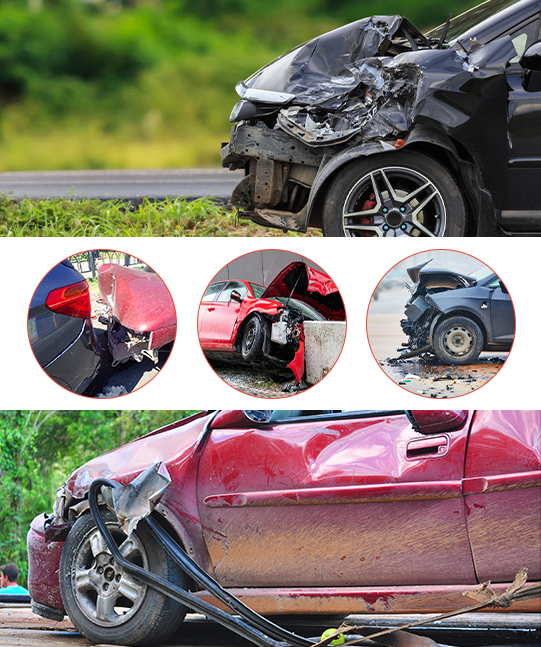
Fortunately, a car accident attorney in Bluffton, SC can help you avoid these pitfalls and obtain the money you need to survive. At Theos Law Firm, our team has a deep understanding of the rules that dictate fault in South Carolina. We know that thorough representation is needed to receive maximum compensation, and we're well-prepared to achieve that goal for you.
Our car accident lawyers in South Carolina can recover compensation for injuries and damages:
- Lost Wages from Missed Work
- Medical Expenses
- Vehicle Repairs
- Pain and Suffering
- Mental Anguish
- Ongoing Medical Care
- Rehabilitative Services
- Loss of Companionship if Crash is Fatal
What Should You Do After a Car Accident in South Carolina?
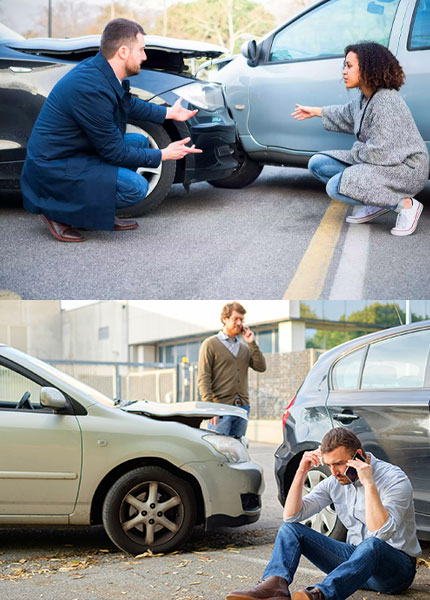
The moments following the crash are often a blur when you're involved in a car accident. However, per South Carolina law, those on the scene must adhere to legal responsibilities and obligations.
First, try to stop your car and ensure it is positioned safely near the scene of the crash. Then, call 911 to report the accident. While most folks go into full-blown panic mode, you need to stay calm so you can process the situation. If you notice that there are injured people, give them "reasonable assistance." Per South Carolina Code of Laws, that could include transporting hurt people to a hospital or calling an ambulance for them.
If you're in a car crash, you need to be prepared to exchange contact information with other drivers at the accident scene. If the person who caused the collision is present, make sure to get their name, phone number, address, and insurance info. If witnesses are present, get their contact info, too, in case our team needs to obtain their account later.
Next, try to piece together how the car crash happened. This is an appropriate time to take photos of the cars, wreckage, and debris. Ask yourself if you think a vehicle failed to follow the rules of the road, like speeding or failing to stop at a stop sign.
Regardless of how minor your injuries may appear and who may be to blame for the accident, get legal advice from Theos Law Firm first before giving any recorded statements or refusing medical care.
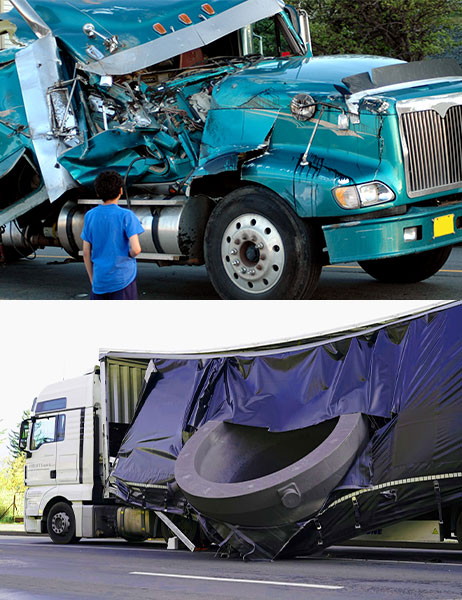
Truck Accidents in South Carolina
Tractor-trailer and semi-truck crashes are often more complicated than two car crashing. Because these cases are more complex and nuanced, it's imperative that you contact a truck accident attorney in Bluffton, SC to help you through the recovery process and win the compensation you deserve.
After a semi-truck crash, you must take steps quickly to preserve evidence so that the crash may be recreated. In serious semi-truck accidents where people are injured or killed, trucking companies usually send a team of investigators to the accident site immediately. These investigators will do their best to obtain evidence that can hurt you in court or even attempt to hide or destroy evidence. The last thing a trucking company wants is for you to win a settlement against them.
That's especially true since various entities may be liable for your truck accident injury, not just the driver. The trucking company, the trucking manufacturer, and the team responsible for truck maintenance could also be responsible. Additionally, if dangerous or inadequate road conditions factor into your accident, you could actually sue some government departments. For those reasons, it's critical to retain quality representation ASAP after a truck accident in South Carolina.
At Theos Law Firm, our team has experience winning compensation in many types of truck accidents, such as:
- No-Zone Accidents
- DUI Accidents
- Trucker Error Accidents
- Negligence Associated with Trucking Company
- Semi-Truck Defects and Malfunctions
- Speeding
- Rear-End Collisions
Car Accident Attorney for chad cook

Car Accident Lawyer for Jack Joseph
Family Law for Deon
Family Law attorney for Kimberly Milligan
Family Lawyer for adriel Willis
Personal Injury Lawyer for Randy Greenhill
Truck Accident Attorney for John Anthony
Truck Accident Lawyer for Gilly Artigues
Law Firm for Rebecca Hinkle
Attorney at Law for Bryan Morales
Car Accident Attorney for Daina McGrew
Car Accident Lawyer for Daina Morales
Family Law for Jesse Hulbert
Family Law attorney for NLMB mari
Family Lawyer for Elias
Personal Injury Lawyer for Elias Latto
Truck Accident Attorney for Joe Sottile
Truck Accident Lawyer for Bruce Cohen
Law Firm for Kimi Swinson
Attorney at Law for David W
Car Accident Attorney for Colson Gunn
Car Accident Lawyer for Hunter McCaskill
Family Law for Meryl Cromarty
Family Law attorney for Nick LaVecchia
Family Lawyer for Kenji Kennerly
How Theos Law Firm Helps Win Your Semi-Truck Accident Case
As your truck accident lawyer in South Carolina, we work hard to fight for your rights and win your case. In order to do so, our team will:

Examine the Semi-Truck Crash Scene
We'll arrive on-scene to notate skid mark length and the locations of vehicles involved. We will also capture detailed pictures and measurements pertinent to your crash.

Collect Records of the Trucking Company
Obtaining the trucking company's records and discovering the info they have on the semi-truck driver involved is an important part of our process. We will also secure access to the trucker's driving log notes, which they must maintain according to law.

Gain Access to the Truck's Black Box
Like airplanes and helicopters, big rigs have a "black box" that records real-time truck data, like speeds, changes in direction, and brake application.

Obtain Evidence
We'll arrive on-scene to notate skid mark length and the locations of vehicles involved. We will also capture detailed pictures and measurements pertinent to your crash.

Bring in Experts
Sometimes an expert is needed to digest all the evidence and provide an expert opinion on the cause of the semi-truck collision. When needed, our team will hire such an expert to ensure your case is robust and air-tight.

Acquire Police Records
We will obtain the police's investigation report and any accident photos, measurements, or other documentation taken by officers while investigating your semi-truck crash.

Interview Witnesses
It's imperative to find all the witnesses of your accident and interview them to get recorded statements in a timely manner. Doing otherwise may result in faded memories and inaccurate facts.
A Personal Injury Attorney in Bluffton, SC You Can Trust
Time and again, auto accident victims agree to early settlements provided by insurance companies because the offer seems like a lot. But what if you return to work after recovering from an accident, only for your pain to return?
With adjusters, lawyers, and investigators at their disposal, insurance agencies will do everything in their power to minimize the compensation you deserve. Don't let them pick on you or silence your voice. If you or a loved are victims of a negligent car or truck accident in South Carolina, contact Theos Law Firm today. We have the team, tools, and experience to fight back on your behalf, no matter how complicated your case may seem.
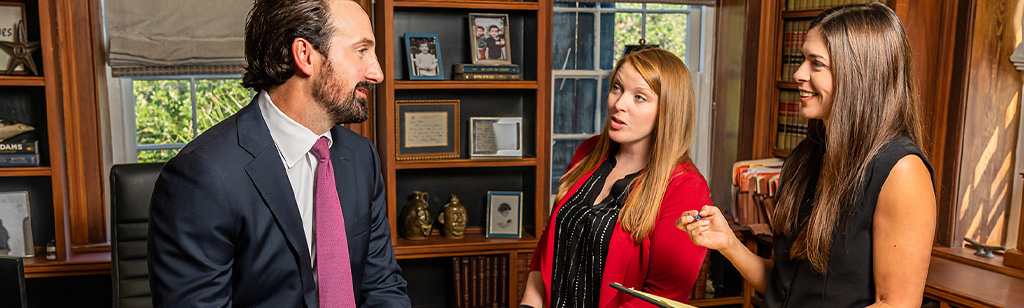
To schedule an appointment for your free consultation, contact Theos Law Firm in Bluffton today.
Free Consultation
Latest News in Bluffton, SC
Stanley Martin Homes Expands Its Presence in the Charleston/Bluffton Region with Multiple New Neighborhoods
WGNOhttps://wgno.com/business/press-releases/globenewswire/9108893/stanley-martin-homes-expands-its-presence-in-the-charleston-bluffton-region-with-multiple-new-neighborhoods
RESTON, Virginia, May 01, 2024 (GLOBE NEWSWIRE) -- Stanley Martin Homes, one of the fastest-growing homebuilders, is excited to announce the opening of four new neighborhoods in Charleston for the Spring of 2024. With a commitment to providing quality homes and exceptional communities, Stanley Martin Homes continues to expand its presence in the region.Stanley Martin Homes' first four neighborhoods will provide additional housing options in the Charleston area.The expansion of their Charleston/Bluffton division reflects an ongo...
RESTON, Virginia, May 01, 2024 (GLOBE NEWSWIRE) -- Stanley Martin Homes, one of the fastest-growing homebuilders, is excited to announce the opening of four new neighborhoods in Charleston for the Spring of 2024. With a commitment to providing quality homes and exceptional communities, Stanley Martin Homes continues to expand its presence in the region.
Stanley Martin Homes' first four neighborhoods will provide additional housing options in the Charleston area.
The expansion of their Charleston/Bluffton division reflects an ongoing commitment to meeting the housing needs of the local community. "We are excited to expand our footprint with new neighborhoods in Charleston, Berkeley, and Beaufort counties. These neighborhoods will bring a variety of floor plans to appeal to an assortment of needs for those either relocating, moving up, or purchasing their first home,” said Josh Balamuta, Division President at Stanley Martin Homes.
For more information about Stanley Martin Homes and current and upcoming neighborhoods, please visit www.stanleymartin.com
About Stanley Martin Homes
Stanley Martin Homes, LLC has been building new homes since 1966. Headquartered in Reston, VA, Stanley Martin is one of the nation’s fastest-growing homebuilders, having built more than 20,000 homes and operating in seventeen metropolitan areas and seven states, including Florida, Georgia, Maryland, North Carolina, South Carolina, Virginia, West Virginia, and Washington, DC. Named National Builder of the Year in 2021 by Builder Magazine, Stanley Martin is driven to deliver on its mission to “design and build homes people love at a price they can afford.”
Stanley Martin Homes, LLC is a subsidiary of the Daiwa House Group. The Daiwa House Group is headquartered in Osaka, Japan and is one of the largest housing, construction, and development companies in the world. For more information about Stanley Martin Homes and its neighborhoods, visit stanleymartin.com.
###
Attachment
Kiante ChapmanStanley Martin Homes803-356-8301chapmankr@stanleymartin.com
NOTE: This content is not written by or endorsed by "WGNO", its advertisers, or Nexstar Media Inc.
Construction begins on $26M workforce training center near Bluffton
Jason Thomashttps://charlestonbusiness.com/work-begins-on-26m-workforce-training-center-near-bluffton/
Listen to this articleWork has begun on the Technical College of the Lowcountry’s $26 million workforce training center.The 50,000-square-foot, state-of-the-art Arthur E. Brown Regional Workforce Training Center will be the second building on the TCL New River campus that spans Beaufort and Jasper counties, according to a news release.The new facility will increase TCL’s capacity by an estimated 850 students.The center’s name hono...
Listen to this article
Work has begun on the Technical College of the Lowcountry’s $26 million workforce training center.
The 50,000-square-foot, state-of-the-art Arthur E. Brown Regional Workforce Training Center will be the second building on the TCL New River campus that spans Beaufort and Jasper counties, according to a news release.
The new facility will increase TCL’s capacity by an estimated 850 students.
The center’s name honors Retired U.S. Army General Arthur E. Brown Jr. for his substantial contributions to the college, the release stated. Appointed to the TCL Area Commission in 1997, he served 23 years — 15 as chairman — until his resignation in 2020. Under his leadership, the college expanded with the opening of the New River Campus and the Culinary Institute of the South in Bluffton.
The State of South Carolina’s 2023 budget included a $10 million appropriation for the center, according to the release. The project is estimated to cost around $26 million with a three-to-four year approval process and construction timeline. The college is partnering with local government, industry and private donors to secure remaining funding.
The center will offer new and expanded programs in manufacturing, automated systems, logistics, business and entrepreneurship, computer technology and more, the release stated. This includes fast-track workforce certifications in areas such as forklift operations and HVAC training that can be earned in a few months or less. Stackable offerings will help break longer programs into smaller chunks, which has many advantages.
“It allows both career changers and incumbent workers to gain new skills as their schedules allow without them having to put a hard stop on their current income,” Vice President for Advancement Mary Lee Carns said in the release. “Plus, students are more likely to finish shorter classes.”
Related: College of Charleston launches 2 new schools
Related: Work begins on Lowcountry Land Trust HQ and Center for Conservation in Charleston
The center’s new programs also align with ongoing initiatives by local chambers of commerce and economic development organizations that are recruiting key sectors — aerospace and defense, light manufacturing and distribution, headquarter and back office, green and alternative energies, cybersecurity and more — to expand or locate here, the release stated.
“These sectors have been strategically identified to fit well within the Lowcountry way of life while having the potential to offer higher wages and to create a more diversified local economy,” John O’Toole, executive director for the Beaufort County Economic Development Corp., said in the release.
The center’s course offerings also mirror the training needs of two other key workforce groups in the Lowcountry: military and small business.
Military members and veterans often turn to TCL to help translate their aviation electronics and aircraft maintenance service into industry-recognized credentials, which sets them up for future employment opportunities, the release stated.
Business and entrepreneurship are becoming popular pathways for veterans as well, the release stated. One recent study showed that veteran-owned businesses doubled in 2021 making up nearly 11% of new business owners in 2021 compared to 5.4% in 2019.
The Lowcountry economy relies on small business success, while entrepreneurship is one of the most popular career choices for younger generations. Data show that more than 60% of Generation Z have started or want to start their own business.
“Enhancing the college’s technology and diversifying our offerings will certainly have a positive impact on the Lowcountry’s workforce and on the region’s overall economic health,” Gough said.
5 things to know before you try the new Dough Boys Pizza in Old Town Bluffton
Lisa Wilsonhttps://www.islandpacket.com/living/food-drink/article286943685.html
The newest pizza sensation in Old Town Bluffton is a name many on Hilton Head Island will recognize.Dough Boys Pizza, which is in its 11th year of business on the island, has opened a second location at 1230 May River Road in the historic building that once was home to Scotts Market. More recently, the space was Bluffton Trading Post, though that closed in late 2022.Now, rows of booths and tables covered with red-and-white-checked tablecloths stretch from t...
The newest pizza sensation in Old Town Bluffton is a name many on Hilton Head Island will recognize.
Dough Boys Pizza, which is in its 11th year of business on the island, has opened a second location at 1230 May River Road in the historic building that once was home to Scotts Market. More recently, the space was Bluffton Trading Post, though that closed in late 2022.
Now, rows of booths and tables covered with red-and-white-checked tablecloths stretch from the front to the back of the space.
Here are five things to know about the new Bluffton restaurant:
The brand new kitchen at the Bluffton restaurant, with a footprint of about 1,000 square feet, is the size of the entire restaurant on Hilton Head.
“The space when we took it over was just one big shoe box, so to speak,” said co-owner Chris Gregory. “We were able to transform it into what we hope is going to be a successful family pizza place.”
The larger kitchen and a dining area that seats up to 80 people — the whole restaurant is about 3,000 square feet — means a more pleasant experience for customers overall and the ability to serve larger parties.
“If you’re waiting for a pizza on the island and you’re waiting for a to-go pizza, you’re standing right next to somebody that is dining,” Gregory explained.
By contrast, the Bluffton restaurant has a small seating area and counter set up specifically for take-out customers.
“Hilton Head is 80% take out and delivery. We are hoping that will flip-flop here where it’s 80% dine in,” Gregory said.
The restaurant on Hilton Head offers delivery, but that’s not currently an option in Bluffton while the staff works up to creating and serving the full menu and dealing with online orders.
“We have a very good reputation on the island,” Gregory said. “We don’t want to tarnish that here, so we’re working at a pace that the food is the same quality, that the timing is the same.”
Once the staff gets to the point where the needs of the dine-in and take-out customers are being met efficiently, only then will delivery be an option.
“And when we do, we’ll use our own drivers,” Gregory said. “We take great care with the recipes and the menus and preparing the food. And I want someone that works for me delivering it.”
Mike Kelly, a longtime employee and now a partner in Dough Boys, is responsible for the restaurant’s pizza-making process.
He started making pizzas as a 16-year-old in New York, but that doesn’t mean the pies he turns out here are New York-style.
“We don’t try to replicate that. .... We make our own style of pizza,” Gregory said. “We have South Carolina pizza with the history of New York and Boston.”
“I kind of brought what I have to the table with different recipes and styles,” Kelly said.
The hand-tossed crust is soft and foldable, the sauce is made in-house with 12 different ingredients, and the toppings are fresh and generous. Dough Boys uses about 10 ounces of sauce and a pound of cheese on each large pizza.
“Pizza is one of those things that everybody has a different perspective about what pizza is,” Kelly said. “People love pizza so much that it automatically has high expectations. Hopefully, we can meet those expectations.”
Last year, Trip Advisor ranked Dough Boys as the best pizza on Hilton Head.
Gregory attributed that to Dough Boys’ consistency.
“Day one pizza and day 1,000 pizza should be the same,” he said. “If you like it once, you’re going to like it the next time you come in.”
A staff favorite is the Ben’s Banging Basil pizza. The hand-tossed crust is topped with pesto sauce, chicken, red onion, fresh basil, sliced tomato and cheese.
Ollie’s All the Way starts with a red sauce base and is topped with pepperoni, sausage, meatball, mushrooms, sweet onion, green pepper, black olives and cheese.
While pizza makes up the majority of orders, Dough Boys has an extensive menu otherwise.
“Pasta is one of the things that we get constantly asked for on the island,” Gregory said. With the extra kitchen space in Bluffton, Dough Boys eventually will be able to add more pasta options.
For now, the spaghetti and meatballs and the chicken parmesan are popular choices. The menu also includes a lineup of appetizers, calzones and subs, including a traditional Philly cheese steak.
“Everybody loves cheesy bread and garlic knots,” Gregory said.
There’s also a more unique section of the menu that offers unlimited customization: the chopped salads.
“We were visiting a friend of ours in New York City and went to a restaurant called Chopped, and it was sort of a Subway set up where you walked in the door, but it was all salad items, and you just went down the line and told them exactly what you wanted,” Gregory explained. “So we mimicked that here.”
At Dough Boys, there’s a list of salad ingredients on the table, and diners can choose exactly what they’d like their bowl to include.
“The salads are a home run. You can’t get a better salad,” Gregory said. “We joke around that if you don’t like it, it’s your fault because you chose the ingredients.”
Bonus tip for salads or as a dipping sauce: The ranch dressing, made in house, gets rave reviews.
Dough Boys in Bluffton has been open starting at 3 p.m. Tuesday through Sunday, and will be closed on Monday, March 25.
Beginning March 26, though, Gregory expects the restaurant to be open seven days a week, from 3 to 10 p.m. Sunday through Thursday and from 3 to 11 p.m. Friday and Saturday.
Happy hour will be from 3 to 5 p.m. daily at the bar only for $1 off beer, $2 off wine or a slice of cheese pizza for 99 cents. Early dining from 3 to 4:45 p.m. includes a “2 for $20” menu.
“Parking during the day is an issue here, so that’s why we’re only doing nights currently,” Gregory said. “We hope to really start doing the business lunches and catering during the day. ... We’ll bring it to them during lunch.”
He said one of the differences between the Bluffton and Hilton Head locations is the amount of foot traffic, people jogging or walking dogs or pushing strollers, in Bluffton.
“I didn’t realize how many people drove their golf carts in Bluffton,” Gregory said, explaining that there is dedicated golf cart parking behind Dough Boys.
So far, the response to the Bluffton location has been positive.
“The third night we were here, we did more (business) than what we did on Hilton Head, and that was without advertising, without a website,” Gregory said. “We’re trying to just pick up what we did on Hilton Head and drop it out here over the bridge in a bigger location, and it’s been successful so far.”
New Italian restaurant coming to Old Town Bluffton. Here’s a look inside before it opens
Lisa Wilsonhttps://www.islandpacket.com/news/business/article286436905.html
One-year-old Joelle DeLeo sat in a stroller rattling a small plastic toy on a recent Thursday morning as activity buzzed around her. She was sitting in the middle of a soon-to-open restaurant that will bear her name in Bluffton.Joelle, the restaurant, is located at 132 Bluffton Road, Suite 100, in a newly constructed building that also is home to a salon, an architecture firm and other businesses. It’s the result of years of planning and work by two ge...
One-year-old Joelle DeLeo sat in a stroller rattling a small plastic toy on a recent Thursday morning as activity buzzed around her. She was sitting in the middle of a soon-to-open restaurant that will bear her name in Bluffton.
Joelle, the restaurant, is located at 132 Bluffton Road, Suite 100, in a newly constructed building that also is home to a salon, an architecture firm and other businesses. It’s the result of years of planning and work by two generations of the family, and, if all goes well with a liquor license and town permits, they will be serving patrons from a “modern Italian” menu later this spring.
Robert and Breana DeLeo, the toddler’s parents and the restaurant’s owner, met while working in the hospitality industry in Charleston, later moved to New York, and now live in Bluffton. Robert’s family owns Island Restaurant Equipment on Hilton Head. His father also is one of the partners in the development of the center where the restaurant is located, making it a true family business.
The DeLeos’ vision for the restaurant is light and airy but still cozy. Breana described it as “modern, but not too modern.”
“We’re trying to go very Italian coastal, very neutral tones,” she said.
That Italian coastal theme echoes in the food served there.
Chef Brandon Torre has worked at The Ritz-Carlton, The Omni Hotel, The Westin Hotel and, most recently, Colleton River Club in Bluffton. He is planning a menu that offers wood-fired pizza and Italian fare including fresh, house-made pasta.
The food will be “from-scratch fresh,” Torre said. “You can usually make it better yourself.”
The goal is not to duplicate traditional Italian-American fare but offer more modern, refreshing and lighter takes.
“We want very unique, very chef-forward dishes with the Italian cuisine as the focal point,” Robert DeLeo said.
To the right of the entrance, Joelle’s bar area will seat 18 between at the bar and at three tables there.
The inside dining area will seat around 44 people at tables and booths, while the outside dining area will seat around 50 people. Between them are large sliding doors that can be left open on nicer days.
The restaurant will be open six days a week for lunch and dinner. It will be closed on Tuesdays.
Why Tuesdays? Many restaurants in Bluffton reduce their hours or close altogether on Sundays and Mondays.
“Coming from New York and coming from an Italian family, we always used to go out for Italian dinner on Sundays,” Robert DeLeo explained. “That’s kind of the day to go out for that cuisine. ... Why not try and compete on those two days when not many places are open?”
This story was originally published March 11, 2024, 11:14 AM.
Follow more of our reporting on Inside Look
Al’s Aloha Kitchen, known for poke bowls + smoothies on Hilton Head, to open in Bluffton
Lisa Wilsonhttps://www.islandpacket.com/news/business/article283429198.html
Al’s Aloha Kitchen is coming to Bluffton.The restaurant, which marked its fifth anniversary of serving up poke bowls and smoothies on Hilton Head’s south end last summer, will be opening a second location along Buckwalter Parkway in the Washington Square development.“We’re excited to be in a place that’s brand new,” said Alex Vitto, the restaurant’s owner.The Bluffton restaurant will be larger than the Hilton Head location, but much of the extra space will be in the kitchen geari...
Al’s Aloha Kitchen is coming to Bluffton.
The restaurant, which marked its fifth anniversary of serving up poke bowls and smoothies on Hilton Head’s south end last summer, will be opening a second location along Buckwalter Parkway in the Washington Square development.
“We’re excited to be in a place that’s brand new,” said Alex Vitto, the restaurant’s owner.
The Bluffton restaurant will be larger than the Hilton Head location, but much of the extra space will be in the kitchen gearing it up for heavier year-round business instead of one with seasonal ebbs and flows on the island.
“We plan to be the fastest restaurant in Bluffton,” Vitto said.
He said he doesn’t plan to change the menu that customers regularly drive across the bridge for. It now features an assortment of poke bowls, superfruit bowls, coffee and smoothies.
“We’ve done so well with Aloha, I’m really not trying to mess with it too much,” he said. “Hopefully there will be more locations down the road.”
Vitto grew up on Hilton Head and has worked more than two decades in restaurants. Living and working with his wife Tori’s family at Sunset Suratt Surf Academy in Hawaii gave the couple inspiration first for Al’s Aloha Kitchen and then for a ramen restaurant called Nood, which they opened in Coligny Plaza in 2021.
Last year, they rebranded Nood from a walk-in restaurant into a hibachi catering business. They sold the physical location, which is now home to Bad Biscuit.
Alex Vitto wasn’t ready to commit to a specific opening date for the new Al’s Aloha Kitchen in Bluffton because the property is still being developed.
“Coming very soon,” he said.
Signs at the Washington Square location say Palmetto Running Company and Birdie James clothing and accessories store are also coming soon.
In the meantime, you can find Al’s Aloha Kitchen at 70 Pope Ave. on Hilton Head. The restaurant is open 9 a.m. to 8 p.m. Monday through Saturday and 9 a.m to 3 p.m. on Sunday. Check out the menu or order online at alsalohakitchen.com.
Disclaimer: