Personal Injury Attorneyin Ridgeville, SC.
We at the Theos Law Firm know that finding the right attorney to represent you is a choice not to be taken lightly.
 843-577-7046
Theos Law Firm:
Rigorous Representation When You Need It Most
When an auto accident happens unexpectedly, anyone can become a victim. One moment you're commuting back home after a long day at the office. The next, your car is totaled, and you're injured in the hospital due to another person's negligence. It's not fair, but it happens every day. Unlike the irresponsible party who caused the accident, personal injury victims often suffer the most in auto accidents. They have to worry about lost days at work, the long road to recovery, and the inability to provide for their family. Sadly, many people injured in car accidents don't have the luxury of worrying about bills because they're fighting for life in the emergency room.
And while modern cars come equipped with safety features like blind spot monitoring and cross-traffic alerts, motor vehicle accidents are still a huge problem in South Carolina. According to the South Carolina Department of Public Safety, in 2020, one person was injured every 11 minutes in a car collision. Even worse, one fatal collision was recorded every 9.1 hours.
Unfortunately, victims of auto accident negligence often don't know what to do when another driver hits them. They have questions like:
- Q."Who do I need to contact once the police leave?"
- Q."How will I go to work on Monday?"
- Q."Will I get fired because I can't show up?"
- Q."How will I take care of my family?"
These same innocent people provide official statements to insurance agencies without knowing the consequences.
However, if you or your loved ones are victims in a car crash, there's good news. Laws in South Carolina mandate that guilty parties must compensate for pain and suffering. But in order to get the compensation you deserve, it's crucial to work with a personal injury attorney in Ridgeville, SC. Experienced personal injury lawyers know how to bolster your case by securing witnesses for questioning, obtaining accident scene information, and documenting vehicle damage. If these tasks aren't completed quickly, you are far less likely to receive the compensation you and your family deserve.
The Theos Law Firm Difference
Theos Law Firm exists to fight for your rights and to ensure negligent drivers are held responsible for the damage they do to your family. It's really that simple. We aren't afraid to trade blows with selfish insurance agencies. Because, unlike Theos Law Firm, they couldn't care less about your best interests.
Here are just a few reasons why so many hardworking people choose Theos Law Firm:

We Know How You Feel
When you're involved in a car or truck accident, it can be a life-changing event. Having represented hundreds of personal injury victims, we understand that you may be confused and frightened. You know you need to speak with a lawyer, but you need a calm, cool presence to ease your anxiety. You need someone who understands what you're enduring, and we know how you feel. Unlike other auto accident attorneys, we believe that personal injury claims are more about the people involved and less about money and settlements. When you reach out to Theos Law Firm, you can rest easy knowing our team will treat you with dignity, compassion, and empathy.

We've Seen It All
With many years of combined personal injury experience, there's nothing that our team hasn't seen in terms of auto accidents. With that said, we understand that there is no "common" type of accident or scenario - no two accidents are the same. We have represented clients involved in DUI accidents, truck rollovers, reckless drivers, interstate pileups, rear-end collisions, and even Uber driver crashes. With such extensive experience, our team has the tools and talent to take care of you, regardless of how complicated your case might be.

We Carry Your Burden
The recovery process involved with automobile accidents changes with every person we represent. There are dozens of details to account for, from car repairs to insurance questions and everything in between. These small but necessary details aren't easy to accomplish for injured parties. That's why our team goes the extra mile to help cut through the red tape to ensure your medical bills are paid, and your car gets fixed. The less weight you have on your shoulders to worry about, the faster you can focus on recovering.
Unlike other personal injury law firms, our team is 100% committed to protecting your rights, and we're uniquely positioned to do so with decades of combined experience. We offer robust representation for many types of auto accidents, including:
- Car Accidents
- Truck Accidents
- DUI
- Rollovers
- Reckless Driving
- Car and Truck Defects
- Speeding
- Rear-End Collisions
- Texting While Driving
- Uninsured Motorists
If you have been the victim of an accident listed above, please understand that time is of the essence. There is limited time to seek compensation for your injuries, hospital bills, lost wages, and more. As such, there is only a short time to obtain experienced representation for your personal injury case.
Our team knows that finding the right attorney to represent you is an important choice. Therefore, we believe that an initial consultation is imperative to understand your needs and identify your goals fully. When we sit down with you to learn the nuances of your accident, we'll cover all aspects of South Carolina law pertaining to your case. That way, you're armed with information and have an idea of the next steps our firm will take to represent you.
Remember - the sooner we can dig into the details of your case, the sooner we can pursue your rightful compensation. As seasoned personal injury attorneys, our team specializes in several types of automobile accidents:
Car Accidents in South Carolina
Car accidents are a serious problem in South Carolina. If you're an adult, you probably know someone involved in a bad car crash in our state. When you look at the stats, it seems like car accidents are always on the rise. One person was killed every 8.2 hours in a car collision. Even more sobering is that one teen driver is involved in a fatal or injury-causing collision every 1.6 hours. The unfortunate truth is that many people involved in car crashes were hurt due to the other driver's negligence.
Common car crash injuries in South Carolina include:
- Head Trauma
- Neck Injuries
- Lacerations
- Broken Bones
- Soft Tissue Injuries
- Spinal Cord and Back Injuries
- Punctured Organs
- Burns
- Disfigurement
Car accident victims in South Carolina are often left to pay their medical bills but can't do so because they're too hurt to go to work or take their car in for repair. These life-changing scenarios can snowball into a series of scary events, leaving victims hopeless and unsure where to turn.
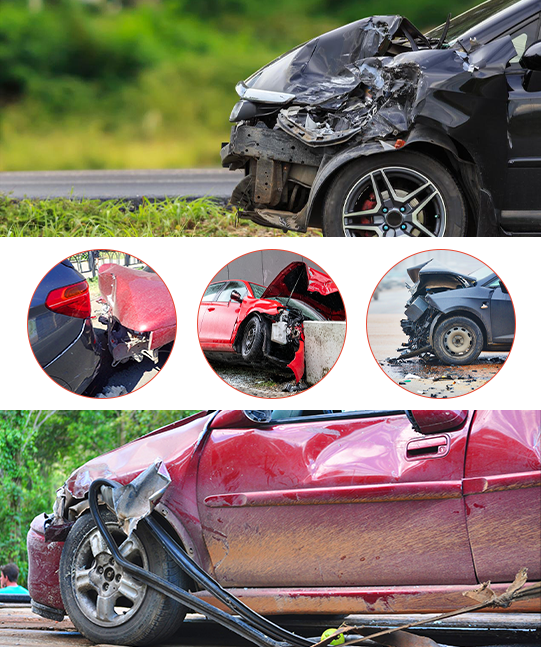
Fortunately, a car accident attorney in Ridgeville, SC can help you avoid these pitfalls and obtain the money you need to survive. At Theos Law Firm, our team has a deep understanding of the rules that dictate fault in South Carolina. We know that thorough representation is needed to receive maximum compensation, and we're well-prepared to achieve that goal for you.
Our car accident lawyers in South Carolina can recover compensation for injuries and damages:
- Lost Wages from Missed Work
- Medical Expenses
- Vehicle Repairs
- Pain and Suffering
- Mental Anguish
- Ongoing Medical Care
- Rehabilitative Services
- Loss of Companionship if Crash is Fatal
What Should You Do After a Car Accident in South Carolina?
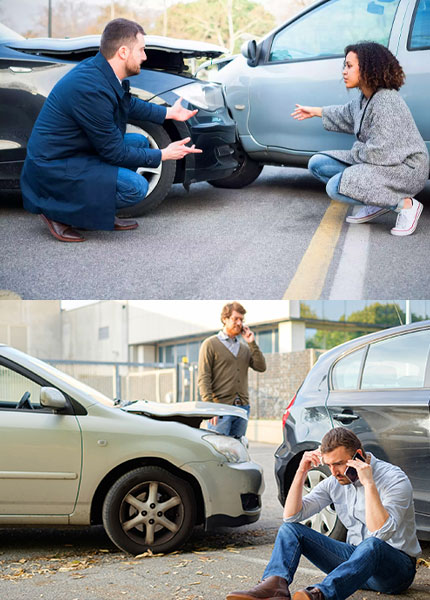
The moments following the crash are often a blur when you're involved in a car accident. However, per South Carolina law, those on the scene must adhere to legal responsibilities and obligations.
First, try to stop your car and ensure it is positioned safely near the scene of the crash. Then, call 911 to report the accident. While most folks go into full-blown panic mode, you need to stay calm so you can process the situation. If you notice that there are injured people, give them "reasonable assistance." Per South Carolina Code of Laws, that could include transporting hurt people to a hospital or calling an ambulance for them.
If you're in a car crash, you need to be prepared to exchange contact information with other drivers at the accident scene. If the person who caused the collision is present, make sure to get their name, phone number, address, and insurance info. If witnesses are present, get their contact info, too, in case our team needs to obtain their account later.
Next, try to piece together how the car crash happened. This is an appropriate time to take photos of the cars, wreckage, and debris. Ask yourself if you think a vehicle failed to follow the rules of the road, like speeding or failing to stop at a stop sign.
Regardless of how minor your injuries may appear and who may be to blame for the accident, get legal advice from Theos Law Firm first before giving any recorded statements or refusing medical care.
Truck Accidents in South Carolina
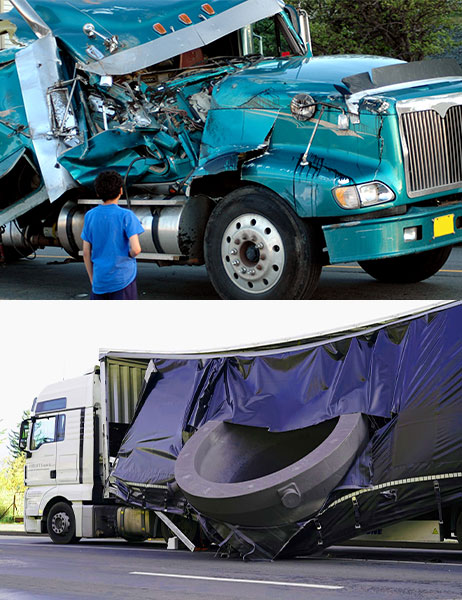
Tractor-trailer and semi-truck crashes are often more complicated than two car crashing. Because these cases are more complex and nuanced, it's imperative that you contact a truck accident attorney in Ridgeville, SC to help you through the recovery process and win the compensation you deserve.
After a semi-truck crash, you must take steps quickly to preserve evidence so that the crash may be recreated. In serious semi-truck accidents where people are injured or killed, trucking companies usually send a team of investigators to the accident site immediately. These investigators will do their best to obtain evidence that can hurt you in court or even attempt to hide or destroy evidence. The last thing a trucking company wants is for you to win a settlement against them.
That's especially true since various entities may be liable for your truck accident injury, not just the driver. The trucking company, the trucking manufacturer, and the team responsible for truck maintenance could also be responsible. Additionally, if dangerous or inadequate road conditions factor into your accident, you could actually sue some government departments. For those reasons, it's critical to retain quality representation ASAP after a truck accident in South Carolina.
At Theos Law Firm, our team has experience winning compensation in many types of truck accidents, such as:
- No-Zone Accidents
- DUI Accidents
- Trucker Error Accidents
- Negligence Associated with Trucking Company
- Semi-Truck Defects and Malfunctions
- Speeding
- Rear-End Collisions
Car Accident Attorney for chad cook

Car Accident Lawyer for Jack Joseph
Family Law for Deon
Family Law attorney for Kimberly Milligan
Family Lawyer for adriel Willis
Personal Injury Lawyer for Randy Greenhill
Truck Accident Attorney for John Anthony
Truck Accident Lawyer for Gilly Artigues
Law Firm for Rebecca Hinkle
Attorney at Law for Bryan Morales
Car Accident Attorney for Daina McGrew
Car Accident Lawyer for Daina Morales
Family Law for Jesse Hulbert
Family Law attorney for NLMB mari
Family Lawyer for Elias
Personal Injury Lawyer for Elias Latto
Truck Accident Attorney for Joe Sottile
Truck Accident Lawyer for Bruce Cohen
Law Firm for Kimi Swinson
Attorney at Law for David W
Car Accident Attorney for Colson Gunn
Car Accident Lawyer for Hunter McCaskill
Family Law for Meryl Cromarty
Family Law attorney for Nick LaVecchia
Family Lawyer for Kenji Kennerly
How Theos Law Firm Helps Win Your Semi-Truck Accident Case
As your truck accident lawyer in South Carolina, we work hard to fight for your rights and win your case. In order to do so, our team will:

Examine the Semi-Truck Crash Scene
We'll arrive on-scene to notate skid mark length and the locations of vehicles involved. We will also capture detailed pictures and measurements pertinent to your crash.

Collect Records of the Trucking Company
Obtaining the trucking company's records and discovering the info they have on the semi-truck driver involved is an important part of our process. We will also secure access to the trucker's driving log notes, which they must maintain according to law.

Gain Access to the Truck's Black Box
Like airplanes and helicopters, big rigs have a "black box" that records real-time truck data, like speeds, changes in direction, and brake application.

Obtain Evidence
We'll arrive on-scene to notate skid mark length and the locations of vehicles involved. We will also capture detailed pictures and measurements pertinent to your crash.

Bring in Experts
Sometimes an expert is needed to digest all the evidence and provide an expert opinion on the cause of the semi-truck collision. When needed, our team will hire such an expert to ensure your case is robust and air-tight.

Acquire Police Records
We will obtain the police's investigation report and any accident photos, measurements, or other documentation taken by officers while investigating your semi-truck crash.

Interview Witnesses
It's imperative to find all the witnesses of your accident and interview them to get recorded statements in a timely manner. Doing otherwise may result in faded memories and inaccurate facts.
A Personal Injury Attorney in Ridgeville, SC You Can Trust
Time and again, auto accident victims agree to early settlements provided by insurance companies because the offer seems like a lot. But what if you return to work after recovering from an accident, only for your pain to return?
With adjusters, lawyers, and investigators at their disposal, insurance agencies will do everything in their power to minimize the compensation you deserve. Don't let them pick on you or silence your voice. If you or a loved are victims of a negligent car or truck accident in South Carolina, contact Theos Law Firm today. We have the team, tools, and experience to fight back on your behalf, no matter how complicated your case may seem.

To schedule an appointment for your free consultation, contact Theos Law Firm in Ridgeville today.
Free Consultation
Latest News in Ridgeville, SC
Disclaimer: